I don’t have post-searching set up. If you clicked here from search engine results while looking for something else, you’ll have to ctrl+f for whatever info you were looking for. If it isn’t here, sorry- I didn’t mean to clickjack you.
Heads up: Lab will be closed on Monday (Sept. 21)
Sept. 14, 2026
Lab will be closed Monday September 21, for maintenance of existing equipment and throughput upgrades to accommodate increased order volume.
Side quest story / GoPro Inc. is NGMI
Sept. 3, 2026
I made a cool video movie camera prototype proof-of-concept thing, and I decided to take it to GoPro headquarters in San Mateo. I’m not a starry-eyed goof, I just exhausted all their avenues of communication and had no way to make an appointment with anyone. Phone numbers led to recordings or foreign call centers that suggested I go to the GoPro website and send an inquiry to their customer service or investor emails, which have full inboxes.
It was a pistol-grip movie camera with a parfocal zoom lens built around a GoPro. Everything I recorded with the thing looked like a scene from a Mondo movie. I packed up my prototype with some snacks and headed to San Mateo. Maybe I’d get to show it to someone, but the main goal was to get an email or a name I could write to.
The office was deserted. A girl working the front desk in a contract security uniform tee was kind enough to take a look around for employees, but found only a single worker in the shipping department. I decided to wait in the lobby, in case someone decided to turn up for work that day.
2 middle aged dweebs who looked like finance types that were trying very hard to not look like finance types walked in, about five minutes apart. Neither could be assed. “Hi there, I’ve got a prototype proof-of-concept I wanted to show someone in R&D. You all can have the design, free of charge. Would you happen to know anyone who might be interested?” was met with “I don’t know anyone” and “Not my department, sorry.”
I left contact info with a girl at the desk and left. I saw an subcontinental couple sitting on the lip of an opened Tesla trunk just outside the entrance. The man was picking bits from the big toe of an unsocked foot. I approached.
Hi there! Long shot, would you happen to be an engineer? At GoPro?
“Yes ser.”
So, you work on the cameras, right? In a development role?
“That is correct ser.”
That’s perfect! I’ve got a prototype camera in my bag here, right now. Do you want to see it?
“Oh, sorry ser. It’s not my place to look at it.”
What? Why? Why not?
“I vork on firmware, ser. It’s not my place to look at it.”
…..Oh. Well, do you know anyone who might want to see the design?
(while nodding “yes”) “No. Sorry.”
????????????
I even forgot that he was picking at his foot before I started talked to him and fucking shook his hand when offered. Ugh.
Look, I did my patriotic American duty and brought my prototype to an American company first. I was going to give it to them for completely fucking free to copy or riff on. Nobody at GoPro gave a rat’s ass, and I was sent off with a toe jam handshake for my trouble.
GoPro wants to become some kind of IBM-thing? Fine. Fuck em. I’m going to hit up Insta360 instead.
Opening late on Thursday (Sept. 3)
Sept. 1, 2026
I’m doing a side quest. The lab will open at 3:00 PM on Thursday, September 3.
GOATed Cameras: Barnack Leicas
August 17, 2026
Do you want to daily-drive a rangefinder camera with lenses wider than 35mm?
Are you picky about the size and bulk of your gear?
Is it important that your camera is an object of beauty?
Is repairability a priority for you?
Do you lack the prerequisite mental illness passion to drop $5500 on an M6 and a lens?
Consider Leica’s range of pre-M cameras called “Barnack Leicas,” or the myriad of near clones that were made around the world, legally or otherwise. They’re (comparatively) affordable because loading is a bit of a hassle and the separate viewfinder/rangefinder windows scare normies away. But if you’re shooting wide angles, you’re going resort to an accessory viewfinder anyway. Why not a Barnack?
100 years ago in Germany, during a morning scrum meeting at a failing microscope company called Leitz, employee and asthmatic Oscar Barnack unveiled a funny little pocket camera he’d been making while goofing off on the clock, thereby changing photography forever. About 60 years ago, Leica (formerly Leitz) dropped support for its venerable but aging L39 thread mount, and released the Leica M series. When was the last lens released for the Leica thread mount system? 50 years ago? 30 years ago? Actually about 3 or 4 months ago this year, by “7Artisans” of Red China.
My Japanese Leica IIIf clone was made in 1951 based on 1933 designs given up by Germany as post-war reparations, and it is currently paired with a Voigtlander lens made in 2011. I had it overhauled in 2025. This is literally the original 35mm still photography system, and it is absolutely still alive.
For those of you who got drawn into film photography in the quest for an object that would last you a lifetime or more with good care and a little maintenance, a Barnack Leica or a copy is exactly that. Expect to spend $200~300 on the body, $250~350 on the CLA, and between $250~1000 on your lens. Expect to drop a band for the entire equipment outfit, but not much more. Don’t humor boomers and their rare Corvette delusions. For the price of a clapped-out M6 and a moldy scratched-up Summicron, you can have a fully restored compact system camera with a lens or two. And a comfortable leather strap. And external viewfinders. And some lens hoods and filters. And a bag. And a round trip ticket to someplace strange and far away, with change left over to spend on weird food and trinkets while you’re there.
A few things to note: Be mindful of the sun so you don’t burn pinholes into your shutter. Don’t pair Soviet made lenses with cameras made anywhere else (Germany, Japan, PR China, USA, UK) or vice versa, and dismiss anyone insisting they are cross-compatible as an idiot or a liar.
Ignored Cameras: Praktica
August 6, 2026
If you’re on a shoestring budget but still want to own German lenses with CARL ZEISS written on them, take a look at Praktika SLR’s made in East Germany. You can often pick up a body and lens for under $100. Please don’t overhype them until their price exceeds their actual value, like what happened to the Olympus mju.
Bring in your prints!
June 20, 2026
Think your work is hot stuff? Bring it here and I’ll pin it on the wall to show off and/or sell.
Download link upgrade
June 11, 2026
Digital download links will be now be active for 3 full weeks, up from the old “end of the week, plus another week.”
🏝️🛫🤑 Corruption Update 🤑🛫🏝️
June 5, 2026
Esteemed patrons,
I am pleased to announce that bribery and corruption are henceforth formalized practices at Mayfield Photo Lab.
Bribe me $25 and your film goes to front-of queue, and you’ll get your scans in 24 hours.
1 roll per corrupt patron, per day.
😉
Blackout Resistance
🟨🟨🟨🟨🟨🟨
🟨🟨🟨🟨🟨🧇
June 2, 2026
Don’t worry about power outages or even mild natural disasters affecting access to processing- all lab equipment is now battery-powered or otherwise backed up. Mayfield Photo Lab will maintain normal business hours and a full range of services even during low level calamities.
In the event of an internet outage, customers will have to collect their scanned files in-person on a CD.
Kodak Snapic A1 Review
April 30, 2026
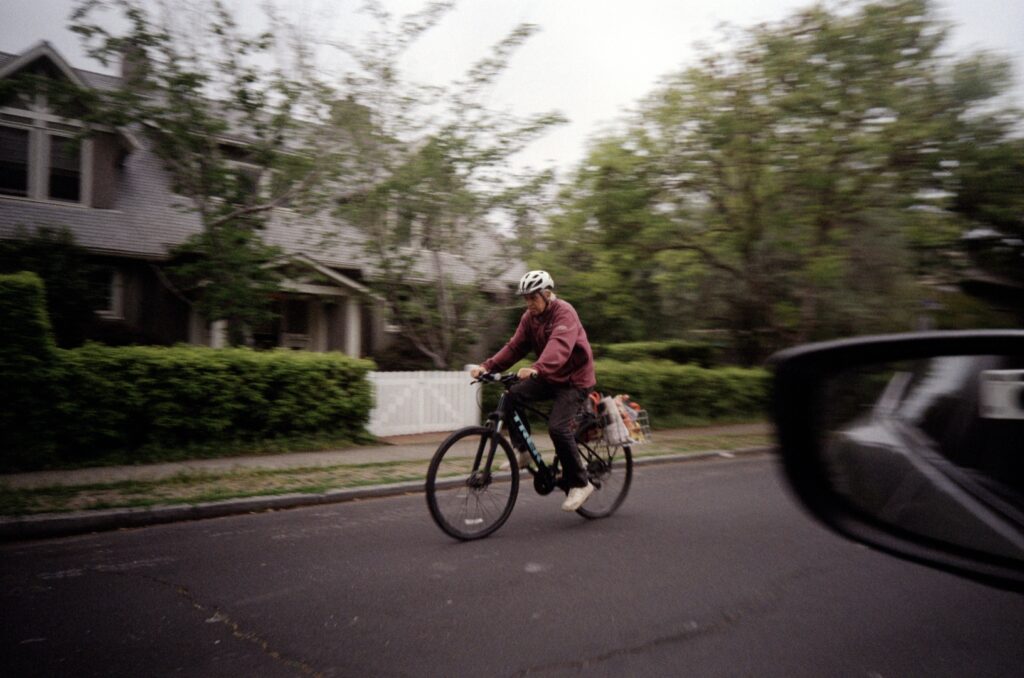
Overcast morning, some shade from trees. Kodacolor 200. The fixed 1/100 shutter speed is enough for moving subjects, but you will have to track your subject in the viewfinder during the actual moment of exposure.
Before I talk about the Kodak Snapic A1, I have to tell you about two other cameras. An expensive one from the 90s, and a cheap one from the 2000s. Bear with me here.
The GR1V by Ricoh, and the Ultra Wide and Slim by Vivitar.
The Ultra Wide and Slim (or just “Wide and Slim” or “UWS”) was a mostly unremarkable shitcam made in Hong Kong and marketed by Vivitar USA in the 2000s, enabled by the advent of cheap aspherical optics made of plastic. It was a plastic ratchet-wheel box camera with a fixed aperture, a fixed shutter speed, and not even a flash. The UWS stood out from among the literal hundreds of other contemporary shitcams on the market with in a few aspects: It was extremely slim, and disappeared in the pockets of even the most constricting of 2010s skinny jeans. It also had a 22mm(!) ultra wide lens, which was an anomaly- most cameras of this type would feature a lens between 40-50mm (a range between “roomy standard” and “tight standard”). The camera was frequently cloned in cheerful colors, and has consistently sold for $35 regardless of inflation for over- well, about as far as I can remember. They were $35 when I saw them sitting on a minilab shelf in the year 2007. For those same 35 dollars in the futuristic year of 2027, you could watch one plop out the back of a delivery drone onto your lawn with all the grace and dignity of a slimy newborn gazelle.
Reto, the Hong Kong based maker of the Kodak Snapic A1, might actually be within 1 degree of separation from the Hong Kong OEM “Sunpet Ltd.” that produced the original UWS for Vivitar. I owned one in bright blue with a screen printed smiley face when I was a little kid, usually kept loaded with Kodak slide film to cross-process. A fun camera that became borderline useless whenever the sun wasn’t around. Surfing the 2010s web, I found blog and forum posts made by fans of the camera documenting crude (and destructive) modifications, which added capabilities such as multiple exposures and even crude flash synchronization, but I never followed them.
The Ricoh GR is a series of premium prime lens (non-zoom) compact point and shoots from Ricoh of Japan, launched in the 1990s. Artist/degenerate Daido Moriyama made it famous with some grungy pics he took as he was growing out of his druggie arc and accepting his unc-hood. It existed in many variations, but the definitive formula is as follows: a sharp wide-angle 28mm lens with a large aperture, predictable and responsive autofocus that can be instantly overridden in favor of a “Snap” hyperfocal mode, a silvered viewfinder displaying frame lines and focus distance, and a control scheme that let you set everything instantly with 2 buttons and 1 dial, all in a devilishly slim package that disappears in a pocket, for a price tag around $800 regardless of inflation. There were a lot of of variations and editions, the GR is now a series of digital cameras on its 10th or 12th generation now- but the concept and price is pretty much the same, although the viewfinder seems to have been banished to an external accessory. I had the very first model in high school, a GR1. It was already almost flawless despite being the very first model, I just hated that the flash always defaulted to “automatic” every time it was switched on. Later models rectify this issue. I sold my GR1 planning on upgrading to the GR1V, a model 2 generations newer, right as my local lab was smash-and-grabbed out of business. I had no choice but to finally pack my bindle and move onto Adobe’s plantation. Even then, I still used a digital GR. It was a passable substitute, an impressive bundle of tech in its own right, for the time and even now- but it didn’t hold a candle to the 90s original in the ways that really mattered. Have you seen Citizen Kane? The Ricoh GR1 is my “Rosebud.” They’re so good, holy shit. If Ricoh re-released a film GR at $800, I would probably immediately sell my entire collection of cameras and buy enough of them to last several lifetimes of careless use. My stable of classic Leica thread-mount rangefinders with external viewfinders, 28mm lenses, and buttery leather straps? It’s all cope. I want the GR back in film, maaaaaaaaan… 😩
Now let’s get back to the camera we’re (I’m) really talking about: The Kodak/Reto Snapic A1.
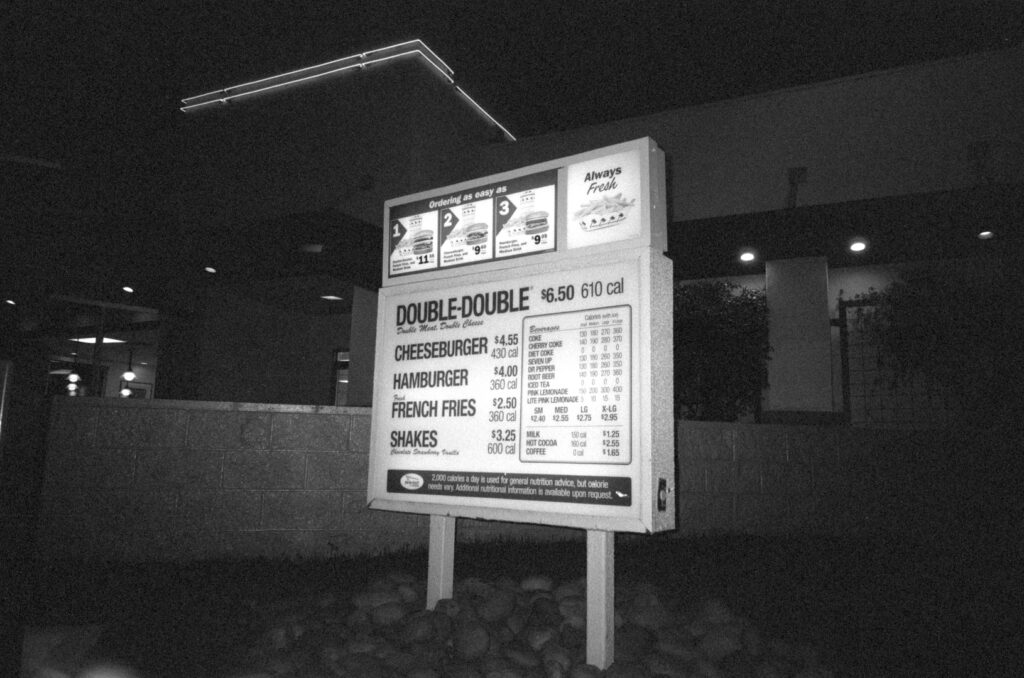
Nighttime, with flash. 400 ASA Kentmere.
The simple and lazy review would be to say the Kodak Snapic A1 is a Vivitar UWS clone, motorized and dolled up to ape the Ricoh GR1 as a lazy and cynical cash grab. This is somewhat true, but there’s more to the A1 that justifies not dismissing it outright. This is Reto stretching and flexing its manufacturing muscle, reaching out and feeling market demand. An outtake. A preview of something bigger, better, and on the way. Besides, it’s only $99.99 plus tax. That’s like $57.99 in pre-corona money.
Have you ever seen a box jellyfish with a pair of primitive eyes? Look up a picture of one, they’re awful. Once you get past the revulsion and the fear of getting stung, you realize that with the addition of those two light-sensing lumps of specialized flesh, an alien wisp of protein in seawater now stares back at you with expressionless, unblinking eyes from what is recognizably a face, perceiving and reacting to life and reality on a wavelength that technically overlaps with yours. This camera is kind of like that. It’s a single-speed plastic box shitcam at heart, but there are electronic growths budding off of it. The beginnings of automation. The box jelly is a living disposable grocery bag that has embarked on the path to becoming some kind of octopus-adjacent creature, and the Snapic A1 is a $35 plastic trashcam evolving in the direction of an $800 Ricoh GR.

Mid-afternoon sun. Overexposed Kodakcolor 200. For a sunny day, try 100 ASA film or slower.
A light sensor sits on the front plate. For now, it only activates the flash in its “auto” mode when its readout value is lower than a defined amount. The very beginnings of a metering system. The LCD is largely superfluous- it displays the flash setting, frame number, battery level, and the lens’s focus distance, for which there a whopping TWO (2.0) possible settings. Silly for now, but future models could display actual information worth considering. Buttons, sliders, levers galore, five in all. They are largely superfluous but very well placed, proof that an intuitive control layout and tactile feedback is on the designers’ minds, even if there is almost nothing to control at the moment. Everything is intentional.
How is the A1 to use? Easy. There’s very little of consequence to actually control on the camera, except the flash and a tab for very general focusing. One button adventure. As stated earlier, it is possible to mildly affect the focus, by flipping a tab under the lens in one direction or another. This camera is NOT an automatic in the normal sense. The facts that this is essentially a reusable disposable with a motor, and that its exposure value is fixed at F/9 and 1/100 sec. should always be kept in mind while using it. Loading and rewinding are, thankfully, automatic. The illustrative diagrams inside the camera, as well as cues on the LCD will guide you through the process. Rewinding is automatic, and happens when the camera detects that the end of a roll of film has been reached. The leader of the film is left out, which has pros and cons- It’s good for labs and photographers developing at home, so a film picker or cassette opener isn’t required. The downside is that it’s easy to mix up exposed and unexposed film. Fold and crease the leader of exposed film, so you don’t get confused.

Overcast day after a rain, lighting is perfectly within the latitude range for Kodacolor 200
What else… uh, the A1 has a multiple exposure mode.
It works, but it’s pretty tortured to use and not as simple as a Holga that will just let you trip the shutter over and over- a bit of a gimmick that only works when pre-planned by choosing a mode, and manually re-cocking the shutter with a sliding switch on the top plate. It’s a congenital difficulty stemming from breeding an extremely basic toy-grade shitcam with elements of a premium automatic compact, but it seems like the designer(s?) didn’t waste the opportunity to gain experience in incorporating a slider. It moves smoothly, springs back without bounce, and doesn’t wobble in its track. Well done, Reto.
The Snapic has a flash with 4 modes, 2 of which you should actually use: “on” and “off.” Don’t remove red-eye, people look funnier with it. The camera will remember the selected flash setting even after the camera is turned off and on again. Excellent. The flash is weak, seems to have 1 output level, and takes 8-12 seconds to charge on a fresh pair of AAA batteries. Not excellent. The old trick of pre-charging the flash capacitor so it’s ready to go as soon as the camera is switched on will not work. For nighttime adventures, leave the camera switched on with the flash set to “on.” That way it’ll be ready to go as soon as you draw, but you’ll still be able to disable the flash with two taps of the control button if you need to. The fact that it has a flash at all vindicates all of us UWS fans who always KNEW in our hearts, that there was room in there for a flash all along. Room enough for a flash, a motor, a pair of AAA’s, and even a screen, as it turned out. We had to wait 20 years for vindication 🥹
Likes:
- Viewfinder (with brightline frame lines and parallax correction marks!)
- Pocketability
- Flash setting memory
- Quiet motor drive – Winding does not begin until you let go of the shutter button. Stealthy! No fuckass clattery plastic thumbwheel nonsense here.
- Noticeably better resolving power and corner sharpness than the average shitcam, likely due to coated multi-element lens block which may incorporate an aspherical element.
- Power switch doubles as shutter button lockout
- 2x AAA’s for power is a nice choice. Tiny specialized photo batteries suck. NiMH rechargeables won’t work.
Dislikes:
- A single shutter speed and aperture is just desolate. The photographer is entirely reliant on his chosen film’s dynamic range for acceptable exposure. Only halfway through your roll of 100, and now it’s dusk? Too bad.
- Flash niggles- Rarely, even when the charge indicator light shines solidly to indicate that the flash is ready, it won’t activate off when the shutter is tripped. I’m not sure if if the flash’s capacitor is somehow rapidly dis-charged every time the camera is powered off, or if the flash is simply locked out by a software approximating its usual charging time, but the flash failing to trigger on occasion despite a “go” indication makes me suspect it is the latter. The flash system is surprisingly frustrating despite its simplicity and the amount of thought was clearly put put towards it.
- Shutter button feels mushy. I’m nitpicking.
- Minimum focus distance isn’t close enough for arm’s length selfies, and I have the wingspan of a grown-ass man. How are those with smaller frames (i.e. children, women, vertically challengeds) supposed to manage?
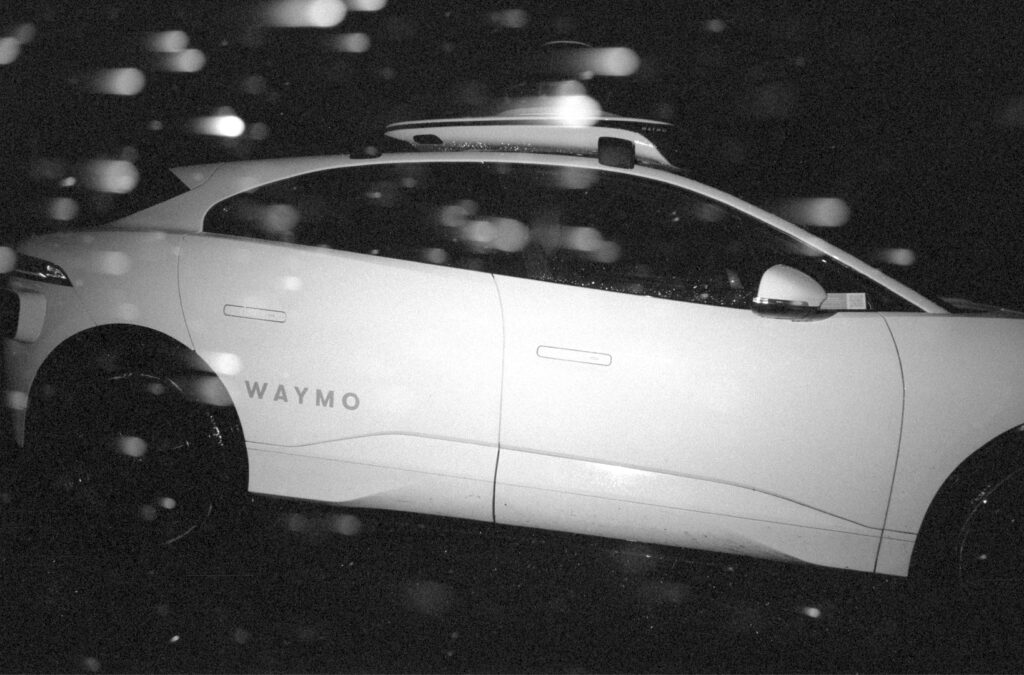
Nighttime, with flash. 400 ASA Kentmere.
Now, I wrote this review looking at the Snapic A1 as a pre-game stretch, and I understand that the choices made for its feature set and design are amount to a balanced equation- but if I were more of a clod who just didn’t “get” things, here’s what I stuff have wanted from a one-off camera:
- At least a 2-speed shutter offering the ability to flip between fast/slow shutter speeds like a “hold your breath” 1/30 and an action-freezing 1/250, or even just copping out with a Bulb mode would have greatly expanded the camera’s range of plausible use. Yes, the flash adds some usability after sunset, but it’s poky and weak.
- A less extreme, but still wide angle lens like 28mm. I’m NOT saying we should go back to the 80s-2000s when everything was a stuffy 38mm, okay? 25mm is just wide enough that faces distort unflatteringly- and besides, everybody knows you shouldn’t start new photographers on ultrawides in the way you shouldn’t buy cigarettes for little kids. It’s bad for developing a sense of composition. 28mm is as wide as things get before lines and perspective start to break down, and is coincidentally the Ricoh GR’s signature focal length.
- Three-zone lever focus like the Japanese Olympus XA2 and XA4, or a four-zone system like the Soviet LOMO LC-A, roughly corresponding to 1, 3, 10, and ∞ in yards or meters.
Is the A1 a good value? A hundred bucks isn’t a good deal- but it’s not a bad deal. You could certainly get a 90s midrange automatic compact camera in decent condition that is technically superior in EVERY way for the same price or less, and you’d get a zoom lens with a faster aperture through its whole range, phase detection or active IR autofocus, zone metering, DX reading capability, and much more.
But the Kodak/Reto exists now, today, in a package that makes perfect sense, as a product you can buy right now. Those vintage automatics are from the past- a foreign country that gets farther and farther away, every day.
It’s worth exactly $100. Not a penny more or less. I wouldn’t buy one as my only camera, but I’d definitely throw it in the bag if I go on a trip. Just in case my Leica clone goes all “classic car” and breaks down.
I’m expecting (incrementally) bigger and bigger things from Reto.
🙂
Lab update, upcoming review- and a rambling rant about manufacturing or demographics or something idk
April 16, 2026
Peak lab traffic being higher than anticipated has been translating into delays for some customers. Workflow changes are on the way- things will get a little better, then much better. Throughput will increase first by 25%, then again by 100%.
I’ll be posting a review of the Kodak Snapic A1 soon. I might have been a little too harsh about it, and I need to come back down to Earth. My customers seem to like them a lot. I’ve been too spoiled by my rangefinders and wide angle primes, and it’s not like Pentax-Ricoh will ever come to its senses and make the GR reissue they keep spitballing, the very camera that the Kodak is trying to vaguely ape with the A1. Man, the GR1V was so peak. If it’s ever reissued, I’d actually sell off my personal camera collection just to get a bunch of GR’s and be set for life.
Why Ricoh won’t just remake the GR1V is a genuine mystery to me, since a compact film camera makes too much sense in the current zeitgeist. A film camera requires no pricey Formosan unobtainium like buffer RAM or CMOS sensor chips to manufacture- only a hinged back, maybe a few strips of foam, and a motor. Even the battery can be the buyer’s responsibility to supply. The savings from that substitution in the bill of materials alone will make it easier to hit an appealing price point- especially to the youth, the top quartile of which would literally rather wave a cardboard fairy wand under an enlarger in a reeking darkroom than become a rent-paying serf to Adobe Inc.
The rest have burned out endorphin receptors from having been raised by the Apple iPad and YouTube’s Autoplay algorithm, and probably couldn’t reason their way out of an empty room without consulting what amounts to a customer service chatbot on the opposite end of a wiretapped pay-per-minute phone sex line. They are a mix of readymade slaves, and unfortunates whose spirits were crushed and milled to a powder between the gears of The System, destined to choose between joining the permanent underclass, or taking a job welding in the bars of our prison planet. There’s no point asking them what them what they want, since the most coherent of them will at best just repeat your most recent marketing propaganda back to you, often verbatim. They also probably won’t have the disposable income after their paying rent and making their monthly purchase of Palantir-branded powdered cricket protein. They should be entirely ignored from a market analysis and product planning perspective.
Mystery Box
February 5, 2026
A junk box of whatever has been established for the enrichment of rummagists and scavengers. Cameras are $20, bags and pouches are $8, “???” is $5. Dig through the treasures within. Satisfy the prehistoric berry gatherer within your soul.
Scanning Update: Kodak Film
February 2, 2026
I did some surgery to my scanning setup to accommodate Kodak’s fat, corpulent, out-of-spec 35mm film, which had caused buckling and unsharp scans for customers using the following Kodak product lines:
- Ultramax (and Fuji 400)
- Colorplus (and Fuji 200)
- Gold
- Portra
- Ektar
- ProImage
For customers who had resorted to using imported film just for sharp scans, rejoice! There is no longer a need to import foreign film of barbarian manufacture.
For customers who either don’t use Kodak at all, or only use Kodak film intended for cinema/government use: (e.g. Aerocolor or Vision repackaged for retail) you were never affected by Kodak’s recent width change, and you can ignore this. Kodak might not give a shit about the likes of you and me, but they’ll bend over backwards to avoid upsetting Uncle Sam or Harvey Weinstein.
Christmas / NYE hours
December 19, 2025
The lab will close early at 6PM on Christmas Eve and New Year’s Eve.
The lab will be closed on Christmas Day.
PSA: Defective Kodak (and “Fuji”) Film
December 12, 2025
It appears that the gauge of most (if not all) Kodak 35mm film made in the past ~5 years are imperceptibly wider than spec, which prevents the film from sitting perfectly flat in the negative carriers of many digital scanners or darkroom enlargers. This will result in much of the image area appearing to be soft or out of focus.
For now, patrons are advised to entirely avoid the following Kodak and Fujifilm branded products:
Affected 35mm Kodak products (as far as I could tell):
- Portra (ALL speeds, except 160 which is unaffected for some reason)
- Colorplus 200
- Ultramax 400
- Kodak ProImage 100
- Kodacolor (ALL speeds)
Affected Fujifilm products:
- Fuji “Nameless” 400
- Fuji “Nameless” 200
- If your 35mm Fujifilm has “Made in USA” on the packaging, it’s made by Kodak.
✅ Kodak products intended for government/industrial use or the motion picture production are still manufactured at the correct gauge. Japanese-made Fujifilm products, and film from literally any other brand are unaffected. ✅
I wouldn’t be surprised one bit if Kodak’s BW lines and other formats are also affected. I couldn’t be bothered to check. I showed you my dick, Kodak- now answer me. Even FOMA in Czecho-Whateverstan the fuck can do this correctly, and they’re broke Lada-driving ex communist europeans who probably fucking drink through the entire duration of their 30 minute work weeks. What the fuck is your excuse for not noticing this for nearly half a decade, Kodak?
The other day, I learned that these subhuman MBA’s actually assigned a term to the practice of actually using the shit you manufacture. Know what they call it? “Dogfooding.” Like, that’s the fucking term they chose. As if the fact that this is a novel concept for them isn’t embarrassing enough, they think it’s somehow beneath them. This kind of insipidity and laurel-resting is why the old “Vineyard Vines and boat shoes wearing East Coast f*ggot” caste was utterly outmaneuvered ousted from their position in American business and politics by shrewder (but still just as shitty) new management.
Sorry gng, I’m mad rn.🥀 I’m mad at the whole corporate side of the photography and imaging industry. They’re so fucking retarded and out of touch in every goddamn aspect of their existence, I hate them fr.
Look at these fucking people and tell me honestly that you wouldn’t violently rob them if you knew you could get away with it, purely on principle. Not even for personal gain, I mean just to throw their keys and jewelry down a storm drain or elevator shaft. These grublike masses of flesh are still flapping their mouths about fucking office scanners in their bios.
(Un)recommendation: Kodak Snapic A1- and a Letter to Kodak
November 29, 2025
$99. Not stocked.
Looks very cool. Don’t buy it. ❌✋⛔
The 25mm ultra-wide lens should be fun, but its fixed f/9.5 aperture and single-speed 1/100 sec. shutter makes it essentially a motorized disposable camera you can reload, placing it in the lowest possible tier of camera. A camera like this certainly has its place as a photographic tool, but people who buy it expecting a small automatic camera (like the sought-after Ricoh GR1 it is styled after) will be severely disappointed to find out that it is not very small and not actually automatic, at least not in the ways anyone would actually want. It’s hipster bait. You’ll have lots of fun until you get your pictures back, and then get frustrated because you think film is a silly waste of time and money.
Dearest Kodak,
Not that any of the subhuman boomer MBA’s in charge at Kodak actually read, (both as in books and in general) but just in case any of them stumbled here: There are ENOUGH “fixed shutter slow lens reloadable disposable type” shitter cameras on the market, and they all fucking suck by design. Just as this one will. As everyone probably knew from the start, before a designer’s stylus ever struck a wacom under pay.
Nobody asked for this, and you all are shooting yourselves in the foot by putting people off film forever by baiting them with this $99 lump of disappointment, lovingly injection-molded in some shithole country sweatshop. Look at you retards, trying so actively to intentionally fail at the “razor blades and handles” model of business. Couldn’t a SINGLE ONE of you shiftless Costco brand polo-wearing nepo-baby cocksuckers in Rochester gather the wherewithal to make something REMOTELY desirable? Genuinely pathetic. I am willing to bet cash that ZERO of your board members are even casual photographers, and that at least 2/3 will probably respond to The Question with “but I did eat breakfast this morning.”
By the way, someone at Kodak quality control needs to check his god damned calipers because all your 35mm made after 2020 is too fucking pig fat wide and doesn’t fit properly in scanner holders or darkroom holder plates that require the film to actually be the correct gauge. I’ve tried to tell someone about this and the odd defective Portra I get from customers, but it’s like anyone I manage to even contact about this are mental defectives who don’t seem to know who to relay the information to, and they themselves don’t even seem sure that they work for Kodak.
Just make cheap film, and make it right. That’s all you ass-clowns need to do. At least put off trying to be a fucking lifestyle brand until your main product stops sucking shit. I’ve watched the insipid genetically determined losers of the Kodak executive board fumble and stumble and trip over their own cocks for a quarter of a century, acting like they’re back in 1998 trying to figure out how to deal with the coming digital future- while it STILL hasn’t even hit management that exact future has already LONG since come and gone, and people just want film.
-J
Coming soon: Rapid Processing
November 16, 2025
I’ll be trialing rapid film processing for a fee soon. One tier will be for 4~5 rolls, sleeved and scanned in 4 hours. The next tier for completion by the next business day, and maybe a discounted tier.
The real goal is to make it viable for someone with a police radio scanner to get breaking news pictures with a grubby Goodwill camera, and send off scans in time to get them in the next day’s paper. I would also like to determine if there are enough crackheads impatient people to subsidize a price drop for those who won’t mind waiting for up to 2 days, with expected efficiency gains from order batching.
(Customers paying the third class fare will still occasionally get orders done same-day, unless someone drops off a full rush order right before.)
Harman Phoenix 200 (Ver. 1) – More on the way!
November 14, 2025
Final run stock of the warm and punchy original and now discontinued Phoenix 200, coming soon. Ilford released this in 2023ish if memory serves, and constantly updated the formula for a few years before discontinuing it to produce a Version II focused on cooler tones. It might be conjecture, but Harman-Ilford seems to be in a process of rapid iteration to create affordable domestic substitutes to imported consumer grade films like American Kodak (Orange) and Japanese Fujifilm (Turquoise).
If the first version was a charming boardwalk portrait of Kodak’s old drugstore films, samples I’ve encountered of second version are more like a buck-toothed wartime caricature of Fuji, failing to truly evoke the vibes of the original- though I’ll have to get my hands on some to find out for myself. Maybe it’s already been improved and iterated, but I’m still stocking V1.
Colors aside, the English film is materially superior to Kodak’s in some respects- its imperceptibly reduced width and flat drying tendency allows it to sit perfectly parallel in most cut-strip film scanners, and move effortlessly through the snaking turns of full-roll scanners with less risk of scratching or catastrophic jamming. This film dries so flat it doesn’t even look real when it’s hanging. I suspect it will translate to improved cross-frame sharpness in the darkroom.
Phoenix 200 (classic) has been extremely popular, and is a personal favorite of mine. We’re all sad to see it go, but it’s better to plaster your sunny memories onto the stuff than to let it languish in a freezer beside a bag of chicken breasts so old, it was already forgotten when Ozymandias’ statue was having its unveiling and ribbon cutting ceremony.
Wolfen discount!
October 13, 2025
The rain and foggy days are back. Wolfen NC500‘s muted, grungy rendering and its spiteful grain will pair nicely with a soggy gray afternoon. Only $5/roll. Get it while you can- when it’s gone, it’s gone.
Mayfield Photo Lab opening on Cal Ave, Palo Alto
October 3, 2025
The lab has been operating in drug-dealer mode for the past year, but no more- Mayfield Photo Lab will be opening up at 441 California Avenue, starting next Monday. 🙂
Camera Recommendation: Lomo LC-Wide
September 27, 2025
The Lomo LC-Wide is a goated camera that is somehow unknown, but is relatively new and one that you should consider. It’s an ultrawide automatic that even has a half-frame mode to double the number of shots per roll, or shoot full frames with the flick of a switch. (Also has a square mode.)
Blows the flimsy fuckass Pentax 17 out of the water at HALF the price at only $280, has been in production for over a decade now, and can be yours new with a warranty from Lomography.com.
Remjet film update and modified hours
July 31, 2025
The fatwa on remjet-coated motion picture film has been lifted, though there will be a $10 per-order charge. This too will be lifted.
I’ll be out of the lab between 4 PM and 7 PM on Friday, August 1. You can still drop off film during this time.
Agfa Pan 100 and Wolfen NC500 now in stock!
July 22, 2025
Smooth, wide latitude BW film at just $5/roll!
Be sure to also try Wolfen NC500 for grungy colors on the cheap. Just $7 per roll.
Kodak Pro Image 100 now in stock.
June 23, 2025
Fine grained and balanced for skin tones. Heat resistant. Perfect for fun in the sun.
Stay hydrated, this film can take a lot more heat than you can.
Cinema film cross-processing
June 19, 2025
E-6 and Slide film cross-processing fees are waived as of June 7, 2025!
Please note: If you shoot re-rolled cinema film, please confirm that the carbon-based “remjet” layer has been removed in advance.
Fresh Minox 9.2mm film now available!
June 7, 2025
36 frame cartridges of fresh film sold.
50-shot film reloads offered if you bring in your Minox. Call or email for details.
Disposable Camera PSA
June 2, 2025
I’ve gotten this question not many times, but enough times that a PSA was needed:
Disposable cameras are NOT meant to be thrown away immediately after use by the user. You fucking idiot.
You bring me the camera. I take out the film, develop it, give you the pictures, then I dispose of the camera. You don’t do that step.
Open. New Cameras.
April 24, 2025
Minox 35 semi-automatic compact (f/2.8 lens!) and Fed 5B rangefinder now available. 🙂
Temporary Closure
February 4, 2025
Lab will be temporarily closed. Re-opening April 12th.
110 and Minox – Good news!
January 18, 2025
110 film and Minox 8×11 film processing is now available at the same price as 35mm.
110 film is now available in the film shop. Minox film is currently available only as camera or cassette reloads. Packaged cassette film will be available Soon™. You gotta trust.
120 – Bad news and unrelated good news.
January 6, 2025
I know I said I would offer medium format processing and scanning soon, but it’s not going well. That said, I’m making more progress on other fronts. Smaller fronts. Teeny-tiny itsy-bitsy fronts. Have you ever seen a film negative smaller than your pinkie nail? Stay tuned for 110 processing updates.
Film Sale
December 17, 2024
35mm fomapan (bw) is five bucks a roll until December 31.
🙂
Tips for film storage
December 14, 2024
Modern consumer color films are quite robust and can survive a wide range of conditions, but some considerations should still be made to ensure color fidelity.
- Extreme or prolonged heat can cause uneven or patchy color shifts on your film. Avoid exposing your film and loaded camera to high heat for long periods of time and remember that it has roughly the same tolerance to it as a human infant. Don’t let your film bake in a hot parked car, don’t store your stash on top of a warm radiator. If you’re traveling somewhere that’s always hot and sunny, try the heat-resistant Pro Image 100 from Kodak, or a regular black-and-white film.
- Prolonged exposure to light can foul your film. Don’t leave film from your vacation on a bright windowsill or on a bookshelf watching the sunset for weeks on end. Try a box, a desk drawer, or a bag instead.
- Damp or humid storage can lead to blotchiness. Dyes and other water soluble chemicals will run and spread. Consider Pro Image 100 from Kodak.
- Airport x-rays and CT scanners can fog your film, or leave ugly wavy patterns on it. Most low sensitivity film used to be able to survive a pass or two without too much ill effect, but modern CT scanners absolutely obliterate your film, especially fast 800 ASA film that is often preloaded in disposables. Always ask for a manual inspection of your film. If there is no way around the scan, remember that duration of exposure is a factor. Put your film through the machine separately and not near anything with a particularly interesting or suspicious cross section. The operator spending 20 seconds to admire the inner workings of your mechanical vintage camera, and then another 10 guessing if your powerbank’s battery is a bomb or not might not seem like much, but it could be the difference between a color cast that can be edited away or ending up with gray mush.
I’m back
November 26, 2024
Lab’s open.
Out of Town
October 26, 2024
The lab will close November 11th and re-open on November 26th.
Minolta Talker available in Camera Shop
October 25, 2024
Yappatron in stock